

Modern Sports Commentary: How Broadcast Voices Shape the Game in 2026
The Role of Commentators in Modern Sports Broadcasting
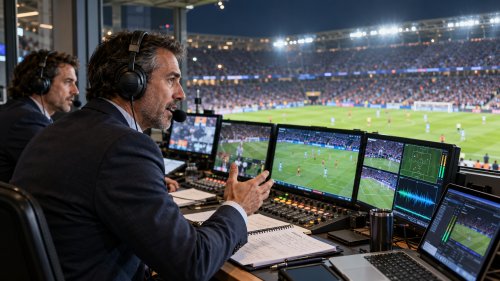
The old play-by-play job was mostly about telling viewers what they could not see. That is gone. When NBC opened its 2026-27 Premier League coverage, Jon Champion handled Arsenal-Coventry City alongside Lee Dixon and Graeme Le Saux; a day later, Peter Drury worked Brentford-Tottenham with the same two analysts. A three-man booth has to make room for far more than names on the ball: a replay that changes the reading of a tackle, a shape that only becomes obvious from the high camera, a graphic arriving between phases of play, then the noise of the ground taking over for a few seconds. The best commentators do not try to fill every gap. Sometimes the right call is to stop talking.
The Work Starts Hours Before the Microphone Goes Live
Preparation now looks increasingly close to reporting. NBC sent Rebecca Lowe, Robbie Earle, Robbie Mustoe and Tim Howard to England for pitch-side coverage across the August 21-23 opening weekend, putting its studio team close to managers, lineup changes and the atmosphere around three different grounds. A commentator may arrive with set-piece tendencies and recent substitutions already marked, then have to abandon half the notes when a red card changes a 4-3-3 into a defensive 4-4-1. Preparation creates options, not a script.
Playing Experience Has to Survive the Replay
Former players remain valuable only when they can translate experience into something the camera confirms. Joe Buck and Troy Aikman entered their 25th season working together in 2026, and ESPN now credits the partnership with more than 400 regular-season games plus more than 40 playoff assignments. Aikman’s strongest moments come when he identifies protection, coverage, or a quarterback read before the replay package makes the same point. NBC uses a similar division in basketball, with analysts Reggie Miller, Jamal Crawford and Grant Hill working beside dedicated play-by-play voices during its 2026-27 NBA schedule.
The Presenter Still Matters on a Second Screen
Sports broadcasts now compete with messaging, statistics, and other live entertainment on the same device. Moving between a match stream and online casino Egypt (Arabic: كازينو اون لاين مصر) encounters a different product, but another format where a human presenter helps organize real-time action. Evolution’s 2025 annual report describes live casino games as tables run by a game presenter and followed by players in real time over video; its current presenter roles also require hosts to explain rules and keep play moving. In blackjack or roulette, the house edge still comes from the game rules rather than the presenter, so clear hosting improves the viewing experience without changing the underlying probabilities or the value of keeping a fixed session bankroll.
The Same Game Can Now Have Two Voices
A major event no longer has one definitive commentary track. ESPN’s Monday Night Football with Peyton and Eli returned for a sixth season in September 2026, with a new “Manning Mode” that places Peyton and Eli inside an Xs-and-Os presentation powered by Next Gen Stats and TruPlay AI. CBS applied a different version of the idea to the May 30 Champions League final between PSG and Arsenal in Budapest, running Beckham & Friends Live on Paramount+ alongside its standard match coverage. One game, different editorial priorities.
More Experts Are Moving Into the Booth
Broadcasters are also breaking apart the old play-by-play-plus-one-analyst formula. NBC has scheduled a Celtics-Pistons “On the Bench” presentation with Terry Gannon calling the game while Robbie Hummel concentrates on Detroit and Brian Scalabrine follows Boston. CBS keeps former NFL and NCAA basketball referee Gene Steratore as a rules analyst for both sports, giving the main booth somewhere to turn when replay wording or an officiating detail needs specialist interpretation. More voices can create clutter. Used selectively, they let broadcasters explain a decision without forcing one analyst to cover tactics, rules and player psychology at once.
Sometimes the Correct Call Is No Call
The booth is only one part of the broadcast now. CBS wrapped 10 hours of coverage around the 2026 Champions League final at Puskás Aréna, with Kate Scott, Thierry Henry, Jamie Carragher, and Micah Richards carrying the buildup and post-match discussion around PSG-Arsenal. Once the game starts, though, more production does not mean more words. On a replay, the commentator might have a few seconds to point out the defender who stepped too early or the runner nobody tracked. After a late goal, there is often nothing useful to add straight away. The pictures are there. The noise is there. Let the crowd have it.